
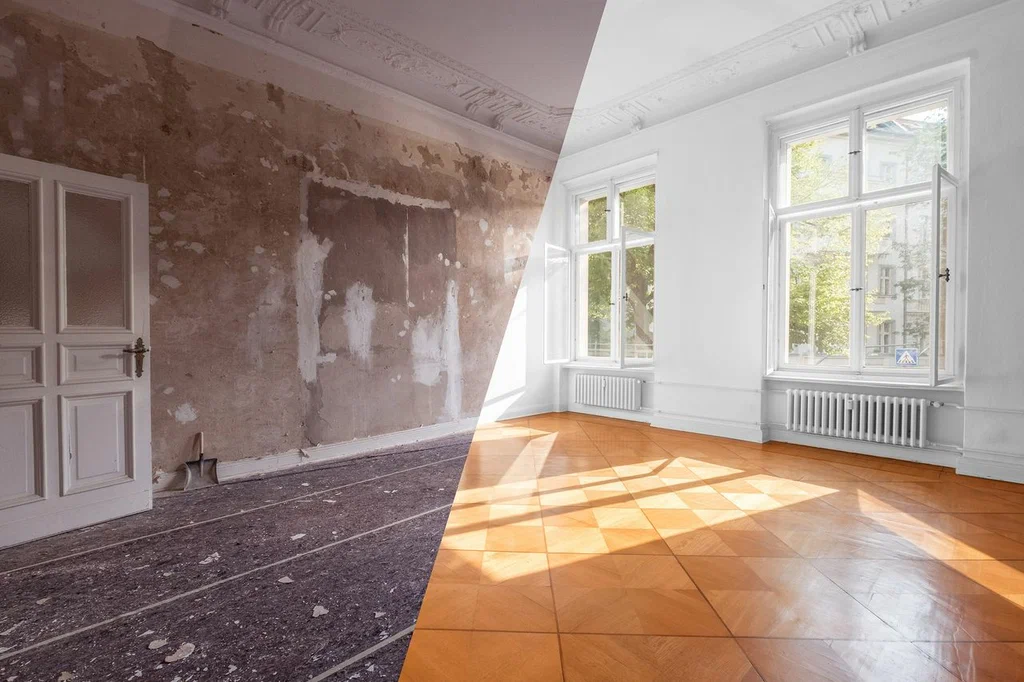
Whether damage comes from a sudden incident, such as water damage, a fire, or extreme weather, or the gradual impact of years of wear, a property owner eventually faces a critical choice: restore it to its former glory or rebuild it entirely. While the two terms are often used interchangeably in casual conversation, the remodeling and construction industry defines them very differently. Confusing them can cause uncertainty regarding project scope, lead to complicated regulatory hurdles, and result in significant budgeting errors.
Knowing whether to repair versus replace is your first step in protecting your investment.
Preserving Authenticity: The Art of Property Restoration
1. The Purpose of Restoration
The goal of property restoration is to maintain a building’s original character, materials, and architectural style. The focus is on bringing a structure back to a specific historical era or the state it was in immediately before damage occurred, without introducing modern designs or materials.
2. Specialized Crafts and Materials
Restoration requires specific skill sets and meticulous craftsmanship. Instead of demolishing original elements and replacing them, efforts concentrate on thoroughly cleaning original masonry, repairing deteriorated timbers, and duplicating period-appropriate plasterwork. While modern systems, such as wiring and plumbing, are often updated to meet safety codes, original architectural details and finishes are repaired using historically accurate materials.
Starting from Scratch: The Building Blocks of Reconstruction
1. When Reconstruction Is Necessary
Reconstruction involves completely demolishing and then rebuilding all or a significant part of a structure. This is typically the only option when a building has suffered catastrophic, irreparable structural damage, such as widespread fire devastation, severe foundation issues, or structural timber rot that compromises the entire frame. In such instances, attempting to salvage old materials is not structurally feasible or cost-effective.
2. Updating to Modern Codes and Designs
Unlike restoration, reconstruction offers a blank canvas. The damaged structural framework is replaced with new engineered materials, and new floor plans and construction methods are employed. This provides an excellent opportunity to create more efficient living spaces, enhance energy performance with updated insulation and systems, and ensure the structure fully complies with current building codes and regulations.
Comparing Restoration vs. Reconstruction: Cost, Timeline, and Scope
1. Understanding the Differences in Time and Regulations
Restoration projects can be lengthy and challenging to predict due to the need for specialized labor, hard-to-find materials, and the highly labor-intensive nature of repair work. Reconstruction projects can also be complex, but they tend to follow a more standard and predictable construction schedule. However, reconstruction requires a complete architectural design package, detailed structural engineering reports, and a comprehensive permitting process with local authorities before work can commence.
2. Choosing the Right Path for Your Property
The decision between restoration and reconstruction boils down to the physical condition of your property and your ultimate goals. If the primary structure is sound and holds considerable historical or sentimental significance, restoration is the clear choice to honor its heritage. Conversely, if the building’s layout is inefficient or the structure is too severely damaged to be repaired practically, reconstruction offers a financially sound and logical path forward to create a high-value, modern asset.
Key Strategic Advice: Always obtain an independent, in-depth structural engineering assessment before budgeting for any project. If structural foundation problems or framing rot are discovered after you’ve already planned and budgeted for a cosmetic restoration, your plans and finances will likely be drastically impacted.
Conclusion
Choosing between restoration and reconstruction is not about selecting one as superior but rather determining the most appropriate solution for your property’s current condition and your vision for its future. Both methods are critical in restoring a property’s safety, aesthetic appeal, and economic value. When you need to bring your property back to its best, the skilled and committed team delivers the expertise, transparency, and engineering excellence to achieve your structural objectives.
FAQs
Can a single remodeling project use both restoration and reconstruction?
Yes. This hybrid approach is common. For example, a project might restore a home’s historic exterior brickwork and original wood trim.
Is restoration always more expensive than reconstruction?
Often, yes. Per square foot, restoration can carry a higher cost because it requires rare, period-accurate materials and specialized artisans who must work slowly to avoid damaging fragile, historic elements.
How do I know if my building’s framing is too damaged to restore?
If a professional inspection reveals that major structural components, like load-bearing columns, sills, or floor joists, have lost their load-bearing capacity due to rot, termites, or fire, full reconstruction is required for safety.
Will homeowners’ insurance pay for restoration or reconstruction after a disaster?
Standard insurance policies are designed to cover reconstruction costs to return your home to a safe, functional state.
How does municipal code compliance apply to restoration projects?
Many local municipalities offer “historic building code” exemptions for restoration projects. This allows older properties to bypass certain modern requirements.