
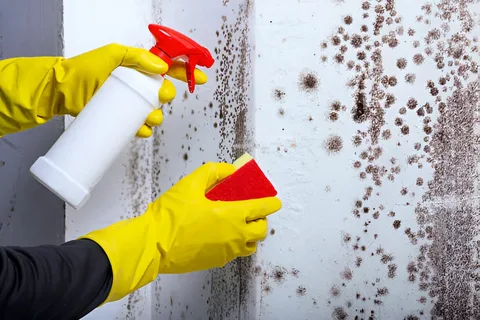
The mold cleanup process is more than wiping away visible spots. Mold spreads through spores, hides behind walls and under flooring, and returns if the moisture that caused it isn’t fixed. Knowing how proper cleanup works helps you decide what you can handle yourself and when it’s time to call a professional.
This guide explains each stage of mold cleanup, the safety limits for DIY work, what affects the cost, and how to keep mold from coming back in Rhode Island and Massachusetts homes.
What Is Mold Cleanup?
Mold cleanup is the removal of mold growth and contaminated materials from a property, followed by cleaning and drying so the area can be used safely again. It is closely related to mold remediation, which also covers finding the moisture source, controlling spread and preventing regrowth. In practice, the two overlap, and the right approach depends on how large and how deep the problem is.
Signs You May Need Mold Cleanup
- Visible dark, green, white or fuzzy patches on walls, ceilings or grout
- A persistent musty or earthy smell
- Water stains, peeling paint or bubbling wallpaper
- Warped or soft drywall and flooring
- Condensation on windows or in bathrooms that never clears
- Allergy-like symptoms that improve when you leave the building
Some of these signs also appear with other problems, so a mold inspection can confirm what is happening and how far it has spread.
Why Mold Grows in the First Place
Mold needs three things: moisture, an organic food source (drywall paper, wood, carpet, dust) and time. Common causes in New England homes include:
- Leaking roofs, plumbing and appliances
- Basement seepage and flooding
- Ice dams and storm damage
- Poor ventilation in bathrooms, kitchens and attics
- High indoor humidity in summer
- Unresolved water damage
Mold cleanup without fixing the moisture source usually fails, because the growth returns.
The Mold Cleanup Process, Step by Step
1. Inspection and assessment
The team identifies the type of damage, how far the mold has spread and what caused the moisture. Moisture meters and thermal imaging can find problems that aren’t visible.
2. Containment
Plastic sheeting and negative air pressure keep spores from spreading to clean areas of the building during work.
3. Air filtration
HEPA air scrubbers capture airborne spores while the work is under way.
4. Removal of contaminated materials
Porous materials with heavy growth, such as drywall, insulation and carpet, are usually removed and bagged. Mold roots into these materials, so surface cleaning alone isn’t enough.
5. Cleaning surfaces
Non-porous and semi-porous materials such as framing, concrete and tile are cleaned with HEPA vacuuming, damp wiping and appropriate cleaning agents.
6. Drying and dehumidifying
Materials and the surrounding air must be fully dried to stop regrowth.
7. Repairs and reconstruction
Once the area is clean and dry, removed materials are replaced. If you need rebuilding, see our reconstruction and restoration service.
8. Final check
The area is inspected to confirm that the mold is gone and moisture levels are normal.
Can You Do Mold Cleanup Yourself?
The U.S. Environmental Protection Agency says homeowners can often handle small areas of mold, roughly under 10 square feet, when the cause is clear and the material is non-porous or easy to clean. Beyond that, professional help is recommended.
| Situation | DIY reasonable? |
|---|---|
| Small patch on tile, grout or a sealed surface | Often yes |
| Mold caused by a one-time spill you’ve already dried | Often yes |
| Mold on drywall, ceiling tiles or carpet | Usually no |
| Area larger than about 10 square feet | No, call a professional |
| Mold in HVAC ducts or returning repeatedly | No |
| Mold after flooding or sewage | No |
| Anyone in the home is immunocompromised or has asthma | No |
If you do clean a small area yourself:
- Wear an N95 respirator, gloves and eye protection
- Ventilate the area and keep other rooms sealed off
- Use detergent and water to scrub non-porous surfaces
- Never mix bleach with ammonia or other cleaners, since this can release toxic fumes
- Dry the area completely afterward
- Discard porous materials that remain stained or smelly
Why Surface Cleaning Often Isn’t Enough
Mold on the surface is only part of the picture. Hyphae (the root-like threads) can penetrate porous materials, and hidden growth may exist behind walls or under flooring. Spraying or painting over mold hides the problem without solving it, and the growth continues underneath.
What Affects Mold Cleanup Cost?
Prices vary widely because every job is different. The main factors are:
- Size of the affected area
- How deep the mold has spread
- Type of materials involved (drywall, wood, carpet, insulation)
- Accessibility, such as attics, crawl spaces and wall cavities
- Level of containment needed
- Whether water damage repair or reconstruction is also required
A written estimate after an on-site assessment is the most reliable way to get an accurate number. For water-related costs, see how much water damage restoration costs.
How to Prevent Mold From Coming Back
- Keep indoor humidity roughly between 30% and 60%
- Use exhaust fans in bathrooms and kitchens
- Fix leaks promptly
- Clean gutters and make sure water drains away from the house
- Run a dehumidifier in damp basements
- Insulate pipes and check attics for ventilation problems
- Dry wet items and surfaces quickly
When to Call a Professional
Call a licensed restoration company if the mold covers a large area, keeps returning, is inside walls or HVAC systems, or followed flooding or sewage. A professional can also help if you have health concerns or need documentation for an insurance claim.
Stateline Restorations is a family-owned company serving Rhode Island and Massachusetts, available 24 hours a day. Call (401) 390-6500 (RI) or (617) 579-7517 (MA), or contact us for a free quote.
Frequently Asked Questions
What is the mold cleanup process?
It typically includes inspection, containment, air filtration, removal of contaminated materials, cleaning, drying and repairs, followed by a final check.
Can I clean mold with bleach?
Bleach isn’t recommended for most mold problems, especially on porous materials, because it doesn’t reach mold rooted inside them. It can also be hazardous, particularly if mixed with other cleaners. Detergent and water work for small areas on hard surfaces.
How big a mold problem can I clean myself?
The EPA generally says small areas, roughly under 10 square feet, can often be handled by homeowners. Larger areas should be handled by professionals.
Does mold come back after cleanup?
It can if the moisture source isn’t fixed. Controlling humidity, repairing leaks and fully drying materials are what prevent it.
Is mold cleanup the same as mold remediation?
The terms overlap. Remediation usually refers to the complete process, including finding the cause, containing the spread and preventing return. Cleanup focuses on removing and cleaning the contaminated areas.
What is the difference between mold inspection and mold cleanup?
Inspection finds and assesses the mold and its cause. Cleanup removes it. An inspection often comes first.
Is mold dangerous to my health?
Mold can trigger allergy symptoms, coughing, eye and skin irritation and breathing problems, especially in people with asthma, allergies or weakened immune systems.
Does homeowners insurance cover mold cleanup?
It depends on your policy and the cause. Mold resulting from a covered water event may be covered, while mold from long-term neglect often isn’t. Check with your insurer.